



Blogs
What’s New
News
-
New Global Coalition Calls for Action as Funding for Critical Food and Nutrition Security Data Systems Declines
With a historic El Niño intensifying and global fertilizer supplies disrupted by conflict in the Middle East, the new Intentional Data Community for Food and Nutrition Security aims to help…
-
Debt burden grows for rural poor (The Daily Star)
A Daily Star (Bangladesh) article highlights findings from studies presented at a workshop organized by the Bangladesh Institute of Development Studies (BIDS) and IFPRI.
-
CAST names Joseph Glauber 2026 recipient of the CAST Lifetime Achievement Award
IFPRI research fellow emeritus honored for more than four decades of analysis and communication on agricultural markets, trade and food security; award to be presented Dec. 10 at the Library…
Events

Publications
Featured Publications
Brief
Data systems under financial strain: Findings from a rapid assessment of 41 food security, nutrition, and health information systems
2026Hillbruner, Chris; Hill, Ruth Vargas; McNamara, Brian; Scott, ZoeJournal Article
Measuring co-coverage in global health and nutrition interventions: A scoping review of analytical approaches
2026Manohar, Swetha; Grounds, Samantha; Kim, Sunny S.; Pandya, Niharika; Morrison, Taylor; Nguyen, Phuong HongJournal Article
India's agricultural policy transitions
2026Kishore, Avinash; Ramaswami, Bharat; Roy, Devesh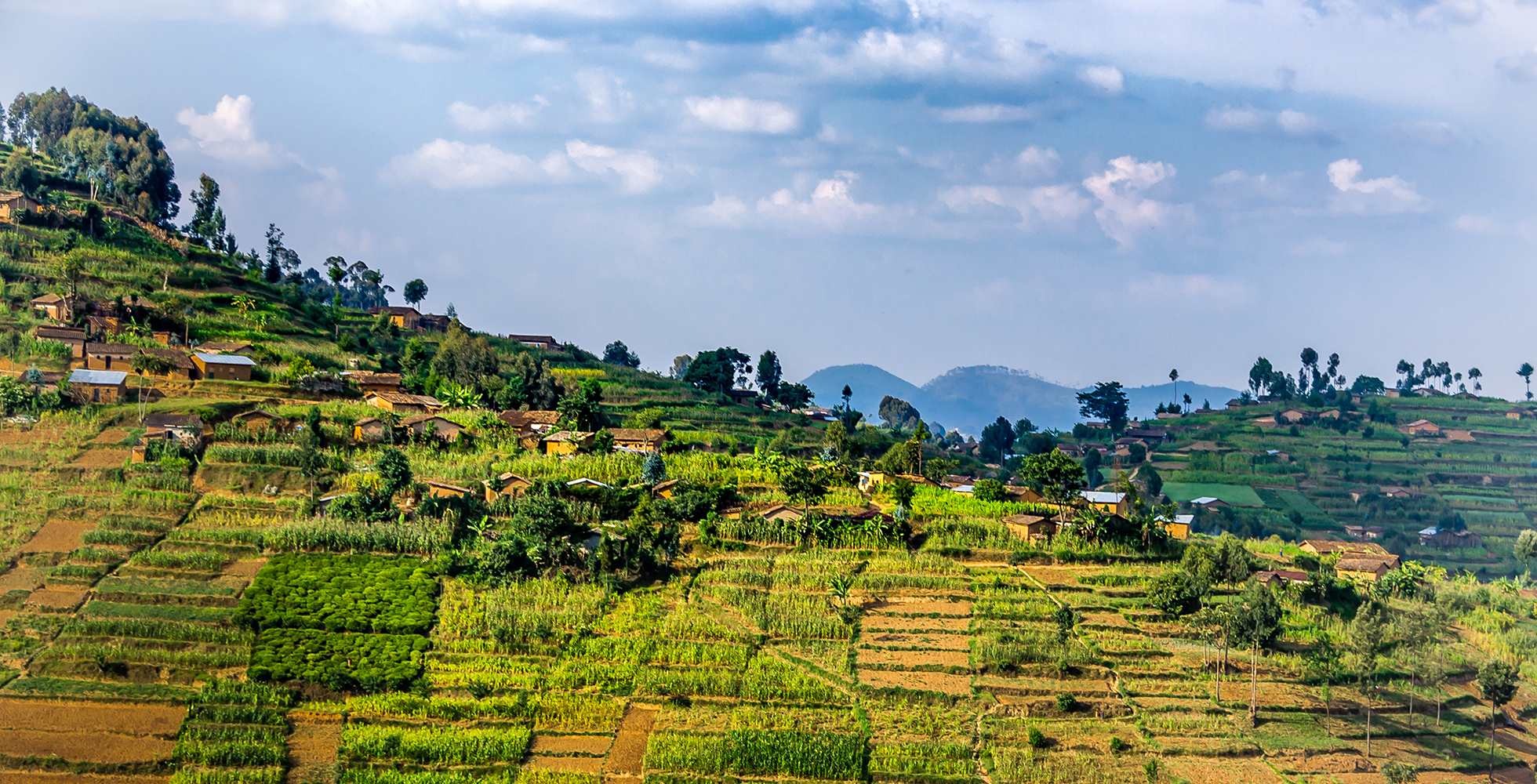

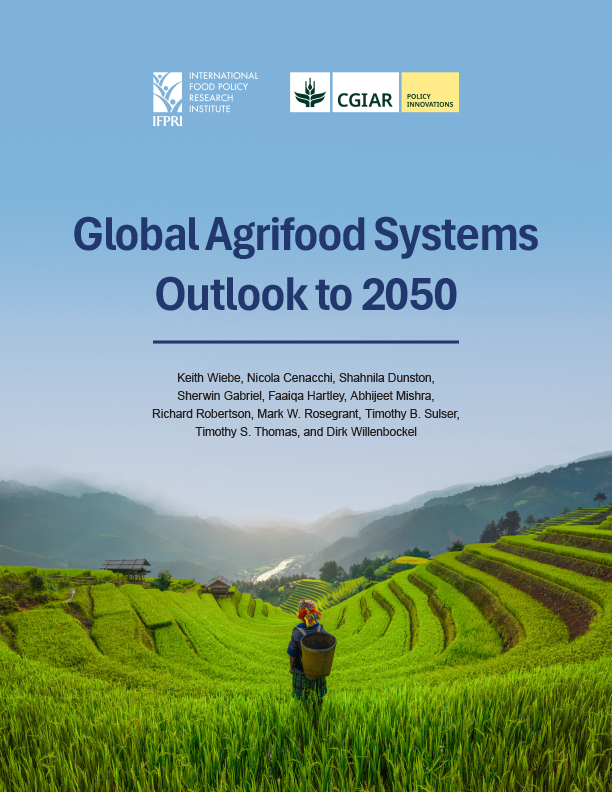
Global Agrifood Systems Outlook to 2050
IFPRI Report published in September 2026
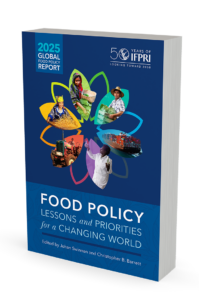
This book, Global Agrifood Systems Outlook to 2050, uses advanced modeling tools to explore how agrifood systems may evolve over the next 25 years. Drawing on peer-reviewed research and expertise across key drivers—including population, income, technology, and climate—the report examines likely changes in food demand, production, prices, trade, resource use, food security and nutrition, and employment and income across seven regions and seven commodity groups. It provides decision-makers with a long-term perspective on emerging challenges and opportunities and highlights the critical role of policy and investment choices in shaping more resilient, sustainable, and equitable agrifood systems.
IFPRI and CGIAR
IFPRI is a Research Center of CGIAR, the world’s largest global agricultural innovation network. IFPRI researchers collaborate closely with researchers from other CGIAR Centers, and our work contributes to the CGIAR mission of delivering science and innovation that advance the transformation of food, land, and water systems in a climate crisis.

Experts in Our Field
IFPRI’s experts work around the world to provide the evidence that supports effective policies to sustainably reduce poverty and end hunger and malnutrition.
480+
staff across the world
70+
countries where we work
#1
in the field of Agricultural Economics
25,000+
research outputs
Meet a Researcher
Upeksha Hettiarachchi is a Research Analyst at IFPRI in the Agrifood Innovation and Resilience Unit. Her background is in environmental economics and policy, and her research interests include ecosystem service valuation, nature-positive agricultural solutions, games for experiential learning, and natural resource governance. Before joining IFPRI, Upeksha worked for the Seychelles Islands Foundation at the Vallée de Mai UNESCO World Heritage site. She holds a BSc in Development and Economics from the University of London International Programmes and an MSc in…


From our video channel
Mamata Pradhan, Research Coordinator
In this video Berber Kramer, Senior Research Fellow in IFPRI’s Markets, Trade, and Institutions Unit, based in Nairobi, Kenya, shares the best advice she has been given in her career and what keeps her passionate about her work. Her research focuses on financial inclusion, technology adoption, gender, and adaptation to climate change.
“Faces of IFPRI” is a series of interviews with IFPRI colleagues around the world, showcasing the diversity of talent, geographies, and research interests across the Institute.

Making a Difference Blog Series
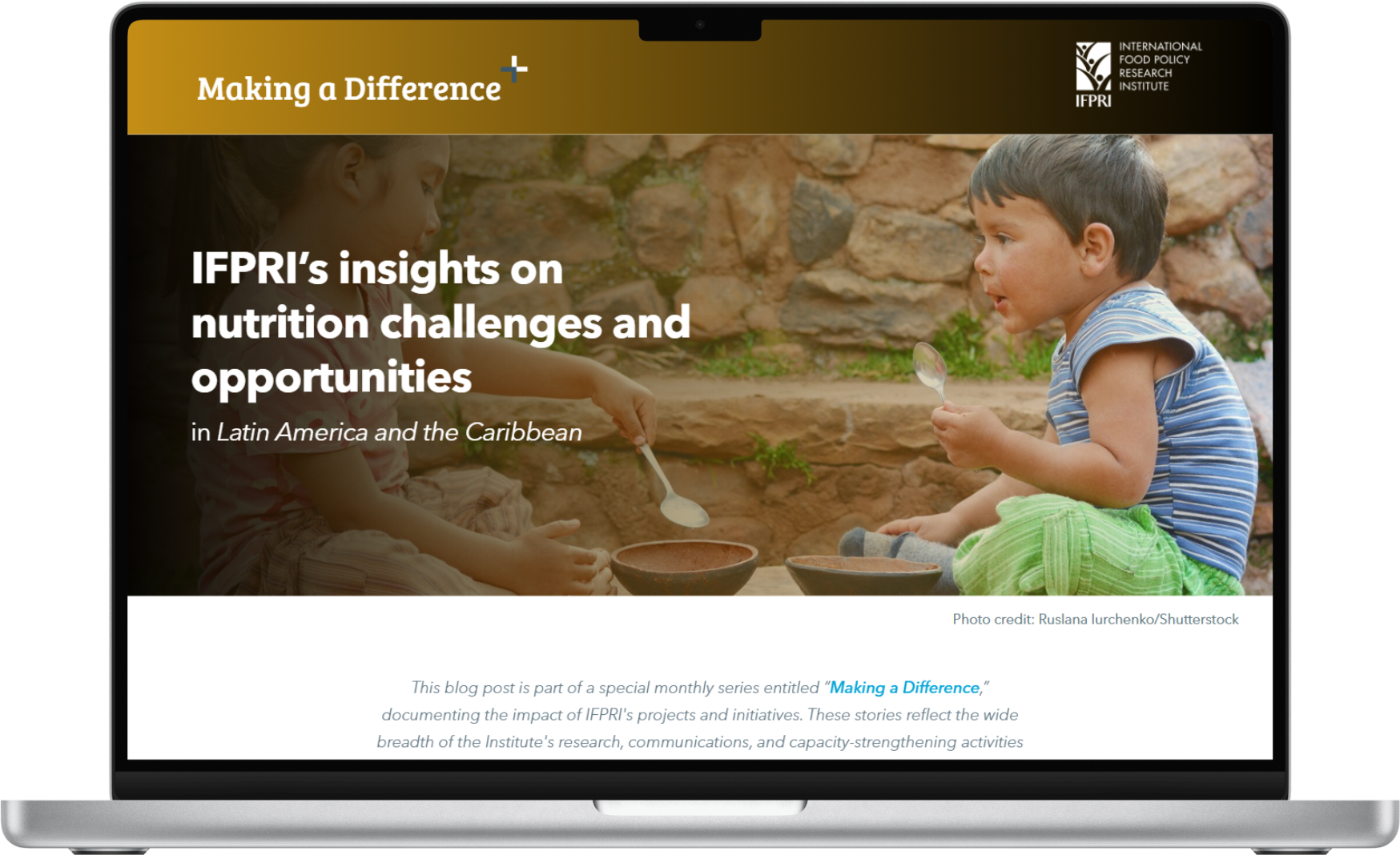
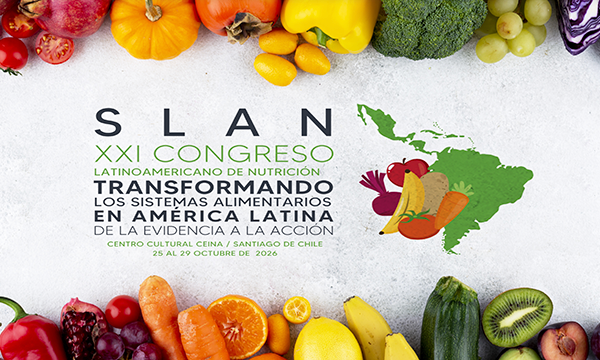
Latin America and the Caribbean face a complex nutrition landscape, with undernutrition, micronutrient deficiencies, overweight, and obesity often coexisting.
Our new story by Amy Margolies and Brian McNamara in the “Making a Difference” series highlights how IFPRI research and partnerships are helping generate evidence on social protection, food systems, and healthy diets to inform policies and programs that can improve nutrition outcomes across the region.

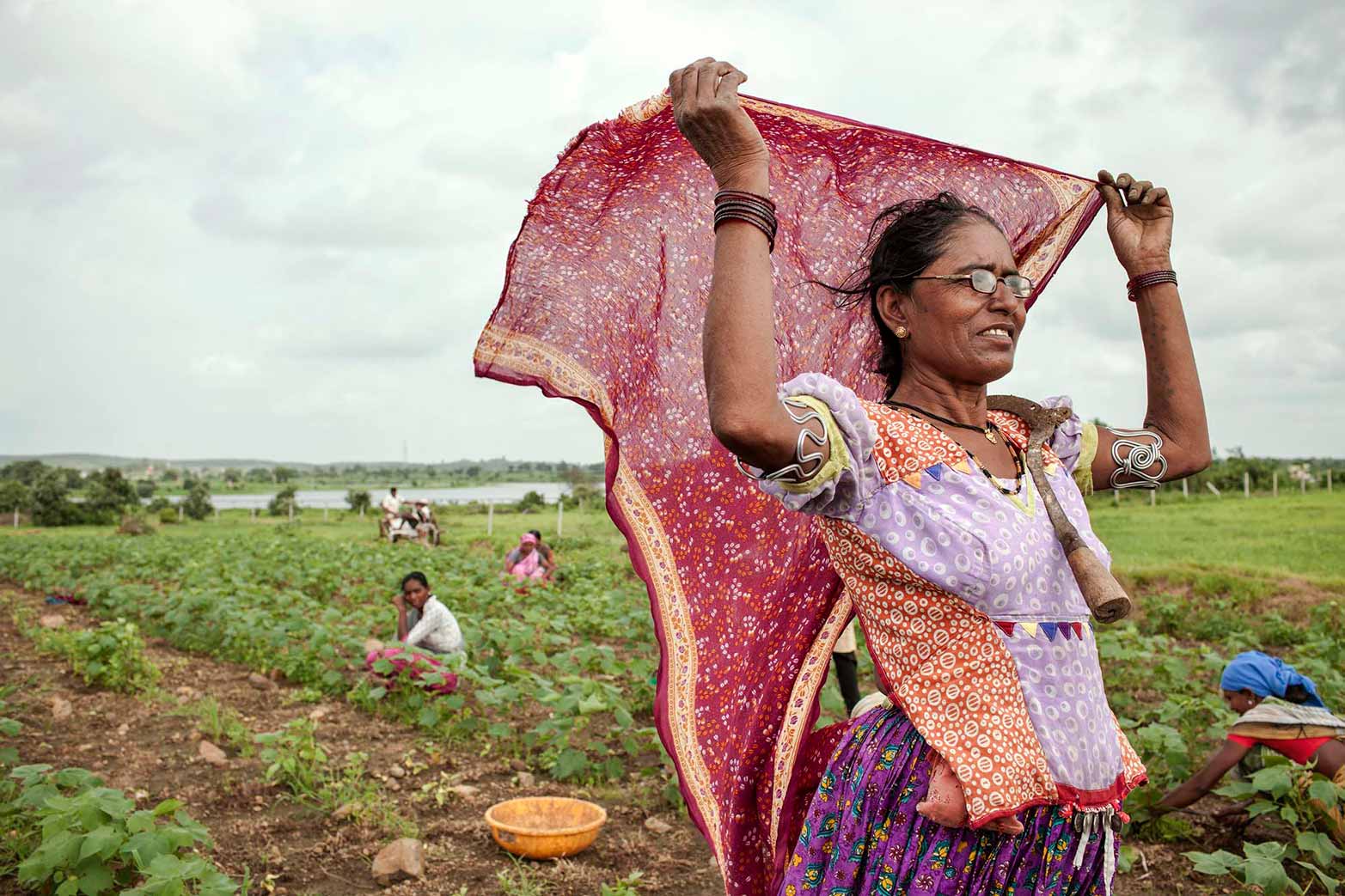
As part of CGIAR’s global gender research community, IFPRI supports the UN International Year of the Women Farmer by providing evidence that expands women’s access to resources, technologies, and markets and strengthens their economic opportunities to advance more equitable, resilient agrifood systems.